How to invest in crypto safely
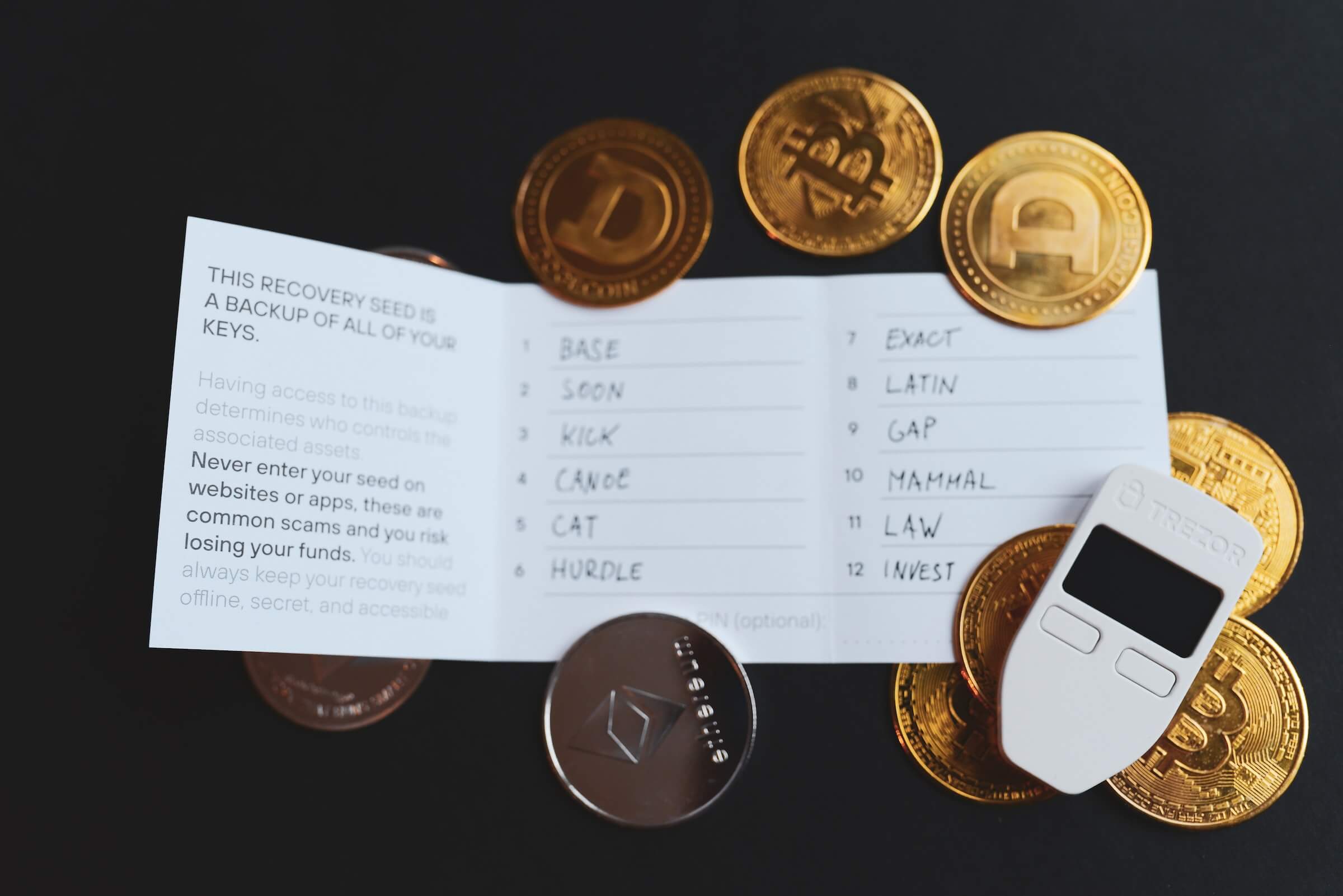
The emerging crypto and web3 space has had a polarizing effect at a global scale. There are firm believers in the power of decentralized networks to democratize finance and beyond, and there are those that despise the wasteful energy practices and potential privacy implications. There are valid arguments on either side, but as is often the case, the reality is more neutral and mirrors that of the advent of the internet itself.
There are obvious growing pains with wild speculation and opportunistic bad actors, but if you can navigate the rough waters there is very real opportunity to diversify your investment portfolio and leverage this disruptive technology at the ground floor. Crypto has been a catalyst for decentralized network adoption promising a chance to reclaim privacy and ownership of our digital lives.
In this article we will cover everything you need to know to get started investing in crypto and to understand and minimize risk.
What we will be covering in this article:
- Where to store Crypto investments to maximize safety and convenience
- How much to invest in crypto to manage risk
- Where to invest in crypto to avoid scams
Where to store Crypto investments to maximize safety and convenience
Tokens, Coins, NFTs, or any other crypto based asset are stored in digital wallets. There are two categories of crypto wallets known as Hot Wallets and Cold Wallets which differ in how "private keys" are managed.
Private Keys
A private key is an increadibly large number that you DO NOT SHARE WITH ANYONE and can be represented in a human readable form known as a mnemonic phrase. As long as you keep a record of your private key (ideally in an "air-gapped" safe location) you can restore your wallet and access your funds.
Your private key should never be accessible by others as this is what proves ownership. Private keys are not stored on the blockchain and no entity should ever require your private key. If anyone asks you should treat it as a phishing scam.
Bitcoin, Etherium, and other Crypto based assets are made possible thanks to Public-Key Cryptography. The general idea is that you keep a secret private key that is used to generate any number of shareable public keys that each make up what is called a key pair. The pair function in such a way that anything that is encrypted with your public keys can only be decrypted by your private key and anything "signed" with your private key can be verified with your public keys as authentic.
Hot Wallets
A Hot Wallet is connected to a network with immediate access to a private key to sign transactions and communicate directly with the blockchain. Since the private key is typically stored within the wallet, transactions are simple and convenient, but the potential of exposing the private key to nefarious actors such as hackers is increased.
The majority of mobile and desktop wallet apps are Hot Wallets making them a poor choice for storing valuable crypto assets. There is, however, some utility in having a mobile wallet to track trends, easily access Decentralized Applications (dApps), or even use disconnected from any networks as a Cold Wallet.
Trust Wallet and Exodus are great options if you are looking for a mobile app, although I still wouldn't hold significant funds for long periods of time. Metamask is another very popular wallet option, however, as a software engineer I recommend staying away from browser extensions if at all possible.
Cold Wallets
A Cold Wallet keeps private keys isolated from any networks. The most primitive form is known as a "paper wallet" which can literally be a piece of paper with your private key or mnemonic phrase written down. Some people even encode the data in a way that only they would know just in case someone was to gain access to it. An example is to transpose the order of some of the words of the mnemonic phrase.
Dedicated hardware wallets exist and have been very popular for added convenience. Often resembling a usb thumb drive, these devices are connected to a network aware device at the time a transaction needs to be signed. They often require a password and some are built with specialized security hardware to help keep your data even more secure.
Another example is the use of a dedicted mobile phone as a Cold Wallet. This is achieved by keeping the network disabled and using bluetooth or usb to connect to your device placing the transaction.
Although one could argue many of these methods are not 100% isolated at all times, they are typically far more secure than Hot Wallets.
If you plan on having a sizable investment in crypto it may make sense to invest in a hardware wallet. The most common hardware wallets are from Trezor and Ledger either of which have proven track records of security and utility.
Ledger
The Ledger Wallet is my personal preference. The sleek steel construction, smaller size, cheaper price, and mobile application availability make this a very popular choice. I also like their Billfodl product which is basically a "paper wallet" on steroids, if you take a look you will see what I mean, making it a great option for those that don't trust anyone and would rather handle it all manually.
Trezor
The Trezor does have one thing that the Ledger does not... A color touch screen option. This makes the Trezor a compelling offer to those who want a little more convenience in the device itself. I do like the idea of a touch screen on a dedicated devices, however, I typically consider long term wear and tear and personally consider this one more thing that could potentially break. It is, however, a very quality built product and has a huge following so it is really up to your personal preference.
Custodians
Finally there is the concept of a third party custodian which can be thought of like a traditional bank. Most cryptocurrencies use distributed networks which allow you full control of your assets if you manage the private keys yourself. However, the majority of investors leverage third party exchanges to place transactions and often store some amount of crypto assets.
These custodians must, at some point, use some combination of Hot and Cold wallets just like anyone else. When you store assets with a third party they are in full control of your private keys and you must rely on them to keep your assets secure. This is why it is important to take some time to research and evaluate any custodian before you start using their service.
The best custodians typically store valuable assets in Cold Wallets disconnected from the network and employ indirect methods to sign transactions or otherwise minimize Hot Wallet usage. Obviously you do not know exactly how they are managing your funds so you must have some level of trust in the entities with which you conduct business. We will cover some of the most trusted custodians more below.
How much to invest in crypto to manage risk
As with any investment vehicle, there is really no one size fits all solution for investing in crypto based assets. There are, however, some general guidelines forming in the community that you can use as a staring point. The short answer is anywhere from 0-30% of your investment portfolio, however, due to the volatility of the crypto market it is wise to stay on the lower end and shoot for a more conservative 0-5% for the majority of investors.
Everyone's situation is different and you should always evaluate your risk tolerance or speak with a financial adviser. When investing in crypto ask yourself if you are ok losing all of your investment, if you diversify this is unlikely to happen, but there are several examples of situations where a particular asset has lost all of it's value very quickly Terra LUNA being one such example.
Investment Allocation
How do you determine how much of your money should be allocated to investments vs savings? The widely accepted rule of thumb is you should always strive to maintain three to six months worth of emmergency savings. You can obviously adjust this value based on your age and living situation. You will need to determine what your primary living expenses are to reach this value.
Consider your housing costs, insurance, average utility bills, any debt payments you need to make, along with a general monthly expendatures on food and other necessities. You will want to save these funds in a high yield savings account that is FDIC insured such as a money market account. I personally recommend looking at local credit unions as they will typically give you better rates and lower fees than traditional large banks, but it is always important to shop around.
Investment Priorities
Your first priorities should be building your emergency savings and paying off high interest debt. Having even $500 on hand to handle unexpected expenses goes a long way to limiting new debt. Debts are typically higher interest than most investment returns so it is most impactful to get that out of the way as soon as you can.
If your employer offers a 401k with match you should try to allocate the maximum you can prior to making any other investments to take advantage of the free money.
After 401k match contributions and while you are working on building emergency savings you may choose to start investing a small percentage of your after tax income. You can shoot for 10-15% in total of which you could invest a smaller 0-5% portion in crypto. This allows you to start forming good investment habbits with a goal of automating your investment strategy. This method of investment is referred to as dollar cost averaging and will be covered more in future articles.
Once you reach your emergency savings goals you have a bit more financial freedom to way risk vs reward. Typically greater rewards come with more risk and vice versa. When you are younger you normally have a greater ability to accept higher risk investments and this gradually decreases as you get closer to retirement age.
Where to invest in crypto to avoid scams
In order to avoid becoming a victim of hacks, scams, and nafarious actors it is increadibly important to do your research when considering where to invest in crypto. Due to their decentralized design cryptocurrencies have opened the door for innovation allowing new players to enter the financial space with a much lower barrier of entry than traditional banking systems.
Although there are many positives that come with market disrupting technologies, there are also countless opportunistic and immoral individuals and entities that are willing to harm others to make a quick profit. Regulators are trying to catch up, but the explosive growth has made it very easy to launch pump and dump schemes, fake assets, phishing scams, and other illegal or otherwise scetchy operations.
Trusted Exchanges
When getting your feet wet in crypto it is best to start with a trusted exchange that has third party evaluations and proof of security practices. It is important that the exchange operates legally in your country, holds any required licenses and certifications and ideally has some level of insurance to protect them from losses. One other thing that I typically look for is the country of origin and operation as there are security implications and concerns when doing business with certain countries.
I live in the USA which has more restrictions on investors and exchanges than the majority of the world. Even at a state level regulations can differ with New York as an example of the most highly regulated in the nation. One part of this requirement that causes friction is known as Know Your Client (KYC) which was set in place with the 2001 USA Patriot Act with the intent of stopping funding of Terrorism and money laundering operations. In the USA exchanges are required to collect name, date of birth, address, and identification numbers and often use some form of picture identification to confirm your identity before you can fully use the platform. I would highly recommend you not try to avoid KYC via VPN or other mechanism as this may lead to your account being closed and lost assets.
With all that in mind there are a few exchanges that I personally use that I believe are worth consideration. I actually maintain accounts at a few exchanges for different purposes as they vary in transaction fees, available assets, and other features.
Gemini
My current favorite and likely the most highly regulated exchange is Gemini. Gemini is a New York trust company regulated by the New York State Department of Financial Services (NYSDFS). As I mentioned previously NY is notorious for being the most highly regulated state in the US for financial institutions.
Gemini offers a very attractive Gemini GROW program (formerly known as Gemini EARN) which offers staking and rewards on a growing list of assets. One thing that is unique about thier offering currently is the inclusing of a high yield return (7.15% APY as of this writing) on thier native GUSD stable coin which is backed 1:1 by the US dollar. This is important to know as many stable coins are not backed by anything and can actually become "unpegged" and destabalize as was the case for TerraUSD (UST) which caused almost total losses for LUNA holders. As usual, no investment is without risk so do your homework before dropping a ton of money into GROW as the assets are not FDIC insured.
UPDATE:
I striked through portions of this last paragraph due to the fallout from the FTX debacle. I still feel Gemini is a worth while company as a whole, but the non-staking Earn/Reward offering became a huge nightmare. I still have assets in the program that are frozen and waiting a resolution. I, however, was prepaired for such an event and didn't put more than I could reasonably lose in the program. I hope for a swift resolution.USD balances on Gemini are FDIC-insured up to $250,000, but without any returns this should only be thought of as a temporary place for your funds between investments.
If you are interested in setting up an account you can
Get $10 (or 10 USD equivalent of your domestic currency) worth of bitcoin by signing up for Gemini
when you buy or sell $100 or more (or 100 USD equivalent of your domestic currency) within 30 days of creating your account.
Coinbase
With over 103 Million users in over 100 Countries world wide Coinbase is a well known and trusted exchange in the crypto space. Coinbase is another American based exchange founded in CA and adheres to strict regulations and the highest safety measures.
Coinbase currently offers a larger list of assets than Gemini, however, their interest earning options are typically lower. They do, however, offer many more featurues such as the opportunity to earn new assets while learning about them. They also offer a debit card linked to your USD balance that offers a percentage of your transaction back in crypto rewards.
If you are interested in setting up an account you can
Get $10 worth of bitcoin by signing up for Coinbase
if you are a US resident and buy or sell $100 or more using coinbase trade within 180 days of creating you account ( Note: This offer currently excludes Coinbase Pro and Advanced Trade).
Kraken
Finally another option worth considering is the CA based exchange Kraken. Kraken has a large number of assets and supports over 190 different countries, as well as offering higher yields on many assets.
I actually do not have any affiliate or refferal links for Kraken, but I do find them a useful and trustworthy addition to consider. I started using Kraken due to the fact that they were typically quicker to add new coins than the previously mentioned exchanges. So if you don't see what you are looking for...
Non-Custodial and DeFi
Apart from the above Custodial exchanges, there also exists non-custodial and Decentralized exchanges. Non-custodial exchanges do not hold your assets and instead facilitate transactions on your behalf while Decentralized exchanges leverage a technology called smart contracts to facilitate trades without requiring a third party intermediary.
Non-Custodial and Decentralized exchanges are more of an advanced topic and with limited regulation can be a bit more risky to work with if you don't know what you are doing. Taxes are a bit more complicated as well since there is still a grey area here and you have to be more diligent on doing your own bookkeeping. Liquidity can also be a concern as the pool of potential buys and sellers can be smaller depending on the asset.
As the adoption of these technologies grow it is becoming more viable to include them in your investment portfolio. I will cover these topics and more in future articles.

